
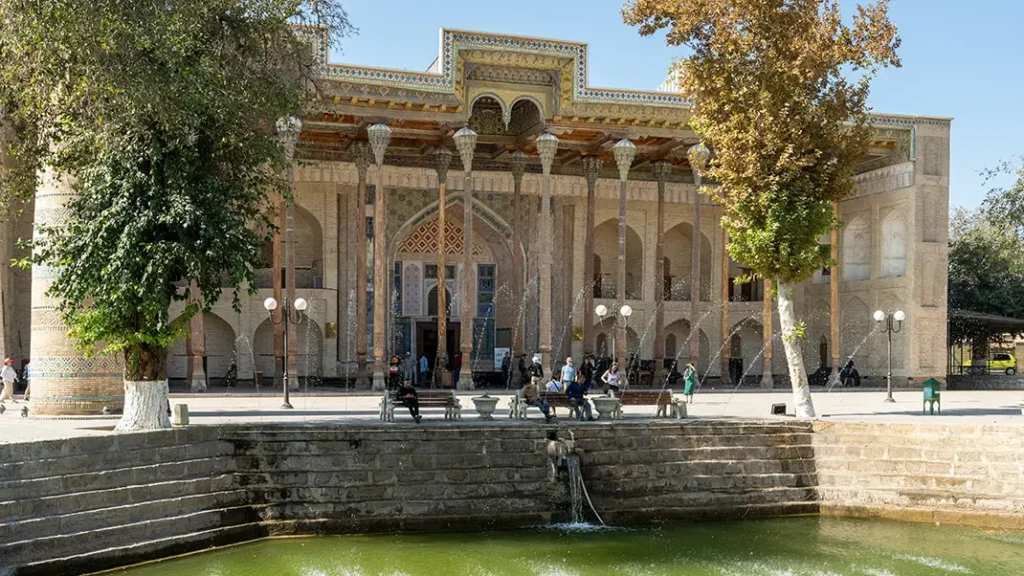
Bolo Hauz Ensemble
The Bolo Hauz Ensemble is one of the most elegant and атмосферных historical sites in Bukhara, known for its unique architectural beauty and tranquil setting. Built in the early 18th century, the complex served as a place of worship for the rulers and nobility of the city, especially during the time of the Manghit Dynasty.
The ensemble consists of a mosque, a minaret, and a large reflecting pool (hauz), which gives the complex its name. The Bolo Hauz Mosque is particularly famous for its impressive wooden columns—around twenty beautifully carved pillars that support the painted ceiling of the entrance hall. These columns are reflected in the water of the pool, creating a stunning visual effect that attracts visitors and photographers alike.
Architecturally, the ensemble combines traditional Central Asian design with delicate artistic details. The painted ceiling features colorful patterns and ornamental motifs, while the wooden craftsmanship demonstrates the high level of skill of local artisans. The nearby minaret, added later in the 20th century, complements the overall composition of the complex.
Historically, Bolo Hauz was used as a Friday mosque for the emir, making it an important religious and social center. Its location near the Ark of Bukhara further emphasizes its connection to the political life of the city.
Today, the Bolo Hauz Ensemble remains one of the most picturesque landmarks in Bukhara. Visitors come here to enjoy its peaceful atmosphere, admire the reflection of the columns in the water, and experience a unique blend of history, architecture, and cultural heritage.