
Shah-i-Zinda
Shah-i-Zinda is one of the most sacred and visually stunning architectural complexes in Samarkand, famous for its richly decorated mausoleums and deep spiritual significance. The name “Shah-i-Zinda” means “The Living King,” and the site is closely associated with early Islamic history and local legends.
The complex developed over many centuries, mainly between the 11th and 19th centuries, and became a burial place for nobles, scholars, and members of the royal family, including relatives of Tamerlane. According to tradition, the site is linked to Qusam ibn Abbas, a cousin of the Prophet Muhammad, who is believed to be buried here.
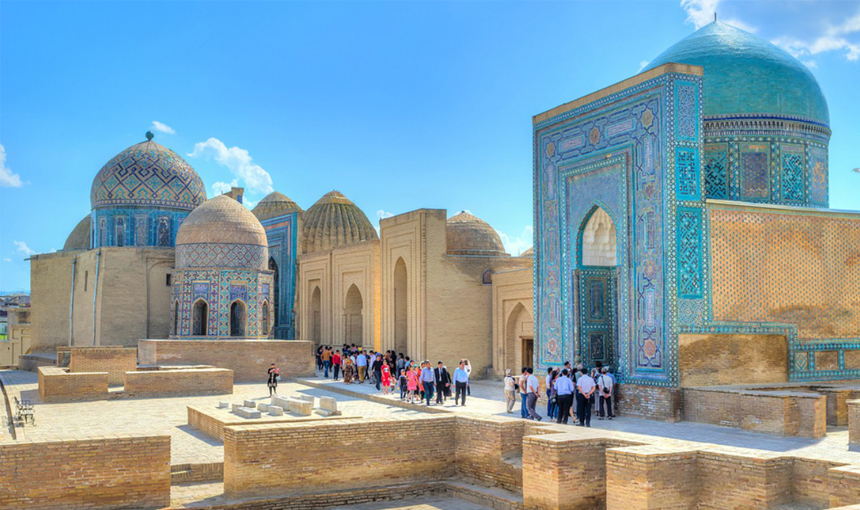
Architecturally, Shah-i-Zinda is famous for its long corridor of mausoleums decorated with some of the finest examples of glazed tilework in Central Asia. The buildings are covered with intricate geometric patterns, Arabic calligraphy, and deep blue and turquoise mosaics, creating a breathtaking visual experience as visitors walk through the complex.
Each mausoleum has its own unique design, reflecting different periods of construction and artistic styles. This makes Shah-i-Zinda not just a religious site but also an open-air museum of Islamic architecture spanning several centuries.
Today, Shah-i-Zinda is one of the most visited landmarks in Samarkand. It is an important pilgrimage site for locals and a major attraction for tourists, offering a powerful combination of history, spirituality, and artistic beauty.