
Juma Mosque
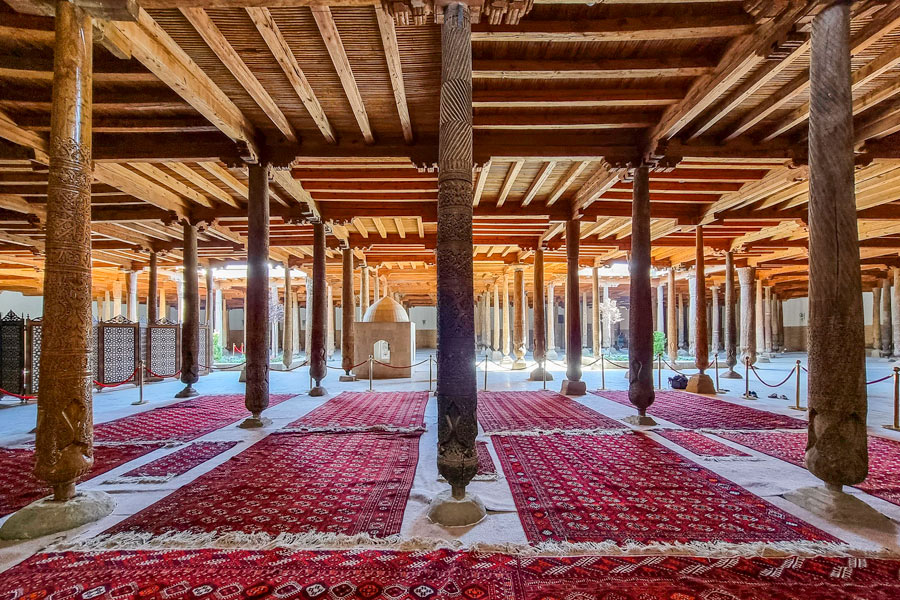
The Juma Mosque is one of the most unique and historically significant religious monuments in Khiva, located in the heart of Itchan Kala. Unlike many traditional Islamic mosques with large domes and open courtyards, the Juma Mosque is famous for its unusual hypostyle hall filled with carved wooden columns, creating a calm and atmospheric interior.
The mosque was originally established in the 10th century and later rebuilt and expanded in the 18th century. Throughout its history, it served as the main Friday mosque of Khiva, where large gatherings for communal prayer and religious ceremonies took place.
Architecturally, the most remarkable feature of the Juma Mosque is its interior supported by more than 200 wooden columns, many of which date back several centuries and feature intricate hand-carved ornamentation. Some columns are believed to originate from earlier structures, reflecting different historical periods and artistic styles. Soft natural light enters the mosque through openings in the roof, creating a peaceful and spiritual atmosphere inside the hall.
The design of the mosque reflects ancient architectural traditions of Central Asia, combining simplicity on the exterior with extraordinary craftsmanship inside. Its minimal external decoration contrasts sharply with the richness of its wooden interior.
Today, the Juma Mosque remains one of the most fascinating landmarks in Khiva and an important example of Islamic architecture in the region. Visitors are drawn by its historical significance, unique architectural style, and serene atmosphere that preserves the spirit of medieval Khiva.